Prof. Jojo Joy and Prof. Lavanya Nagarajan
In today’s hyper-connected world, your personal brand speaks before you do. Whether you’re a student, an early professional, or a future leader, how you show up - online and offline, shapes opportunities, credibility, and how people perceive you.
In a recent webinar hosted by Xavier Institute of Management & Entrepreneurship (XIME), faculty and leaders shared practical insights on what personal branding really means, why it matters for students, and how to start building it, authentically, right now.
Here are the key takeaways you can apply today.
What Is Personal Branding (and Why It Matters)?
Your personal brand is the reputation you build and the story people remember when they hear your name. It’s not about being flashy or pretending to be someone you’re not. It’s about:
Even simple interview questions like “What are your hobbies?” aren’t casual. They reveal your curiosity, discipline, and personality. What you do outside academics signals who you are beyond your resume.
The 4 Pillars of a Strong Personal Brand
1. Accuracy (Be Real)
Don’t fabricate achievements or interests. Authenticity builds trust.
2. Coherence (Be Consistent)
Your interests and values should make sense together - even if they don’t fit stereotypes. You can be analytical and adventurous. Both can coexist.
3. Compelling Presence (Be Memorable)
You don’t need to be loud to stand out. Quiet confidence and clarity leave a strong impression.
4. Differentiation (Be You)
Stand out naturally. You don’t need outlandish behaviour - just a clear sense of what you bring to the table.
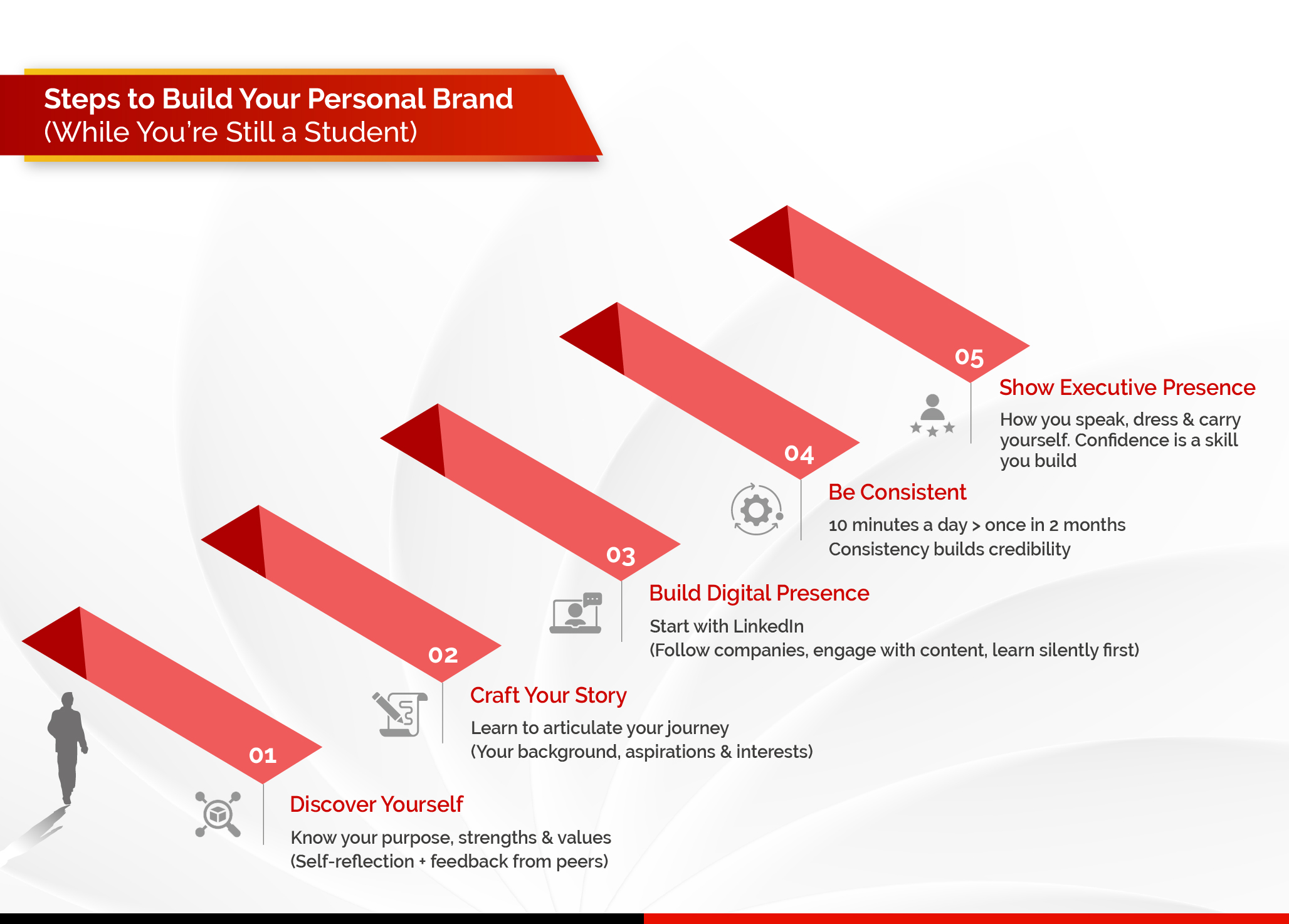
Step 1: Discover Yourself (Find Your Purpose)
Before you showcase yourself to the world, understand yourself first.
Ask yourself:
This process of reflection - sometimes called finding your Ikigai (your reason for being) - helps align your studies, interests, and career goals. Seek 360° feedback from friends, mentors, and faculty. Often, others see strengths in us that we overlook.
Step 2: Build Your Digital Identity (Start Small, Be Consistent)
Your online presence is often your first impression.
Start here:
Consistency beats intensity. Even 10 minutes a day builds visibility. If you disappear for months, you become invisible.
The Core Elements of Personal Branding
Purpose & Values
What do you stand for? What impact do you want to create?
Expertise & Skills
Know your strengths. Identify gaps. Build them through projects, certifications, and hands-on learning.
Voice & Communication
Practice confident communication - interviews, group discussions, presentations. Your tone and clarity matter.
Visual Identity
How you present yourself - professional dressing, grooming, and context awareness - creates subconscious impressions.
Digital Footprint
Your profiles should tell a consistent story. Don’t let your professional identity contradict your online presence.
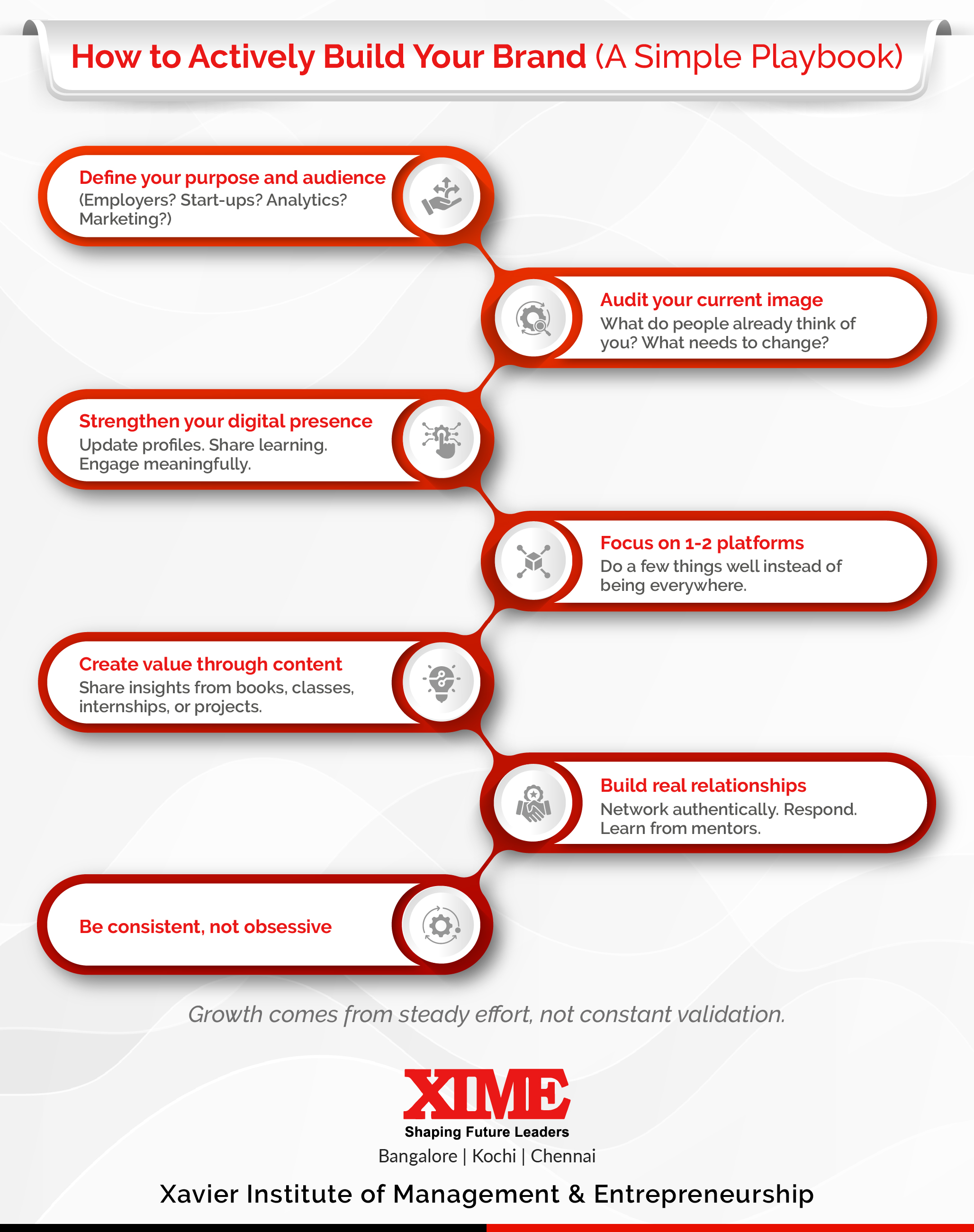
How to Actively Build Your Brand (A Simple Playbook)
The Power of the Elevator Pitch
Can you introduce yourself clearly in 60–90 seconds?
A strong elevator pitch:
Practice until it feels natural, confident, and authentic.
Executive Presence: The Leadership Edge
Personal branding goes hand-in-hand with executive presence - the ability to command respect through confidence, clarity, and composure.
You don’t need to fit a “leader stereotype.” Executive presence is built through:
It’s a learnable skill - and students can start building it today.
How XIME Shapes Authentic Leaders
At Xavier Institute of Management & Entrepreneurship, personal branding isn’t taught in isolation - it’s built into the learning experience through:
The result? Students don’t just earn a degree - they build identity, credibility, and leadership presence.
Three Things You Can Start Doing Today
1. Get Focused
Decide your direction. Pick an industry or role and build skills aligned to it.
2. Curate Your LinkedIn Presence
Show consistent interest in your chosen domain. Reflect your learning journey.
3. Build One Core Skill Deeply
Choose one relevant skill (data, analytics, finance tools, communication) and master it. Skills are your currency.
Final Thought
Your personal brand isn’t built overnight. It’s shaped by daily choices, honest reflection, and consistent action.
Start small. Stay authentic. Be consistent.
Your future self will thank you.